Surveys: Mix questions and formats to spot friction before launch
Team Askable
•
February 6, 2026

•
Surveys become incredibly powerful when you mix question types and formats to uncover friction points before a product, feature, or experience goes live.
By combining structured questions with open text prompts, rating scales, and adaptive flows, teams can identify usability issues, emotional blockers, and expectation gaps early, reducing the risk of costly post launch fixes.
Modern survey design recognizes that no single question format can reveal the full truth. Multiple choice questions help quantify patterns, scales show intensity, emotion indicators capture sentiment, and open text fields provide color and context. When used together, these formats give a complete picture of user experience. Mixing formats also keeps participants engaged and encourages more honest responses by allowing them to communicate in ways that feel natural. This layered approach ensures teams uncover not just what works, but where users hesitate, misunderstand, or struggle, long before launch day.
Adaptive logic makes mixed format surveys even more effective. When surveys shift based on responses, follow up questions can dig deeper into friction areas or skip irrelevant topics altogether. This creates an experience that feels tailored and thoughtful, which boosts completion rates and quality of feedback. By blending formats and logic, surveys become a diagnostic tool that reveals barriers before they become real world issues. Teams can catch confusing flows, unclear messaging, unexpected emotional reactions, or unmet expectations early enough to make meaningful improvements.
Askable is the modern research platform for velocity-obsessed teams.
Let's chatProduct teams rely on mixed question types to validate features, uncover friction, and prioritize improvements before development resources are fully committed. Structured questions reveal whether users understand a feature, how likely they are to use it, and what expectations they bring. Scales show how strongly users feel about various aspects, such as ease of use or value. Open text responses reveal the reasoning behind those ratings, helping product teams identify hidden blockers. This combination helps teams make data informed decisions, reduce risk, and ensure that the product experience aligns with user needs from day one.
Research teams mix formats to understand user behavior with both precision and depth. Multiple choice questions uncover clear trends, demographic differences, and behavioral patterns across large samples. Open text fields capture nuanced stories that highlight friction, frustration, and workarounds. Emotion based scales reveal tone, sentiment, and intensity. When combined, these formats give researchers a multi dimensional understanding of where friction exists and why. This helps them build stronger insights, support hypotheses with evidence, and guide organizational strategy with confidence.
Design teams use mixed format surveys to understand how users interpret flows, visuals, and interactions before finalizing designs. Rating scales help measure clarity, usability, and delight, while open text feedback reveals what felt confusing or unintuitive. Multiple choice questions can test comprehension of labels, hierarchy, or navigation patterns. Emotion indicators highlight where a design evokes frustration or confidence. By blending these formats, design teams can spot experience gaps early and iterate quickly. This ensures that the final design is intuitive, accessible, and aligned with user expectations.
Get a sneak peak into the product, and everything Askable can do for you.
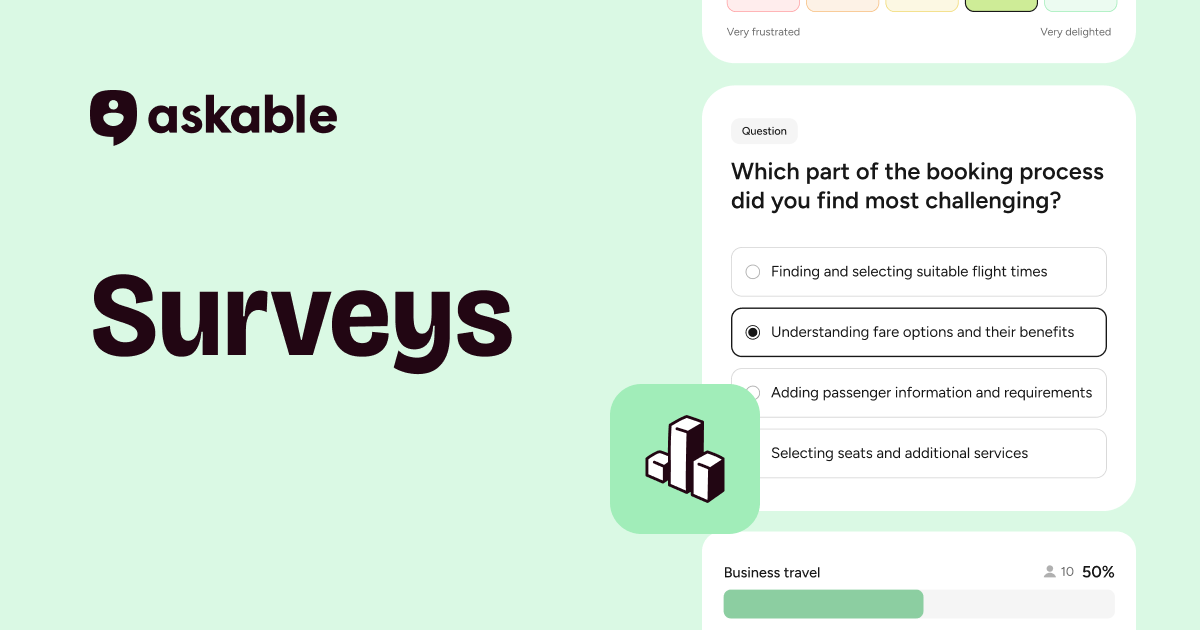
Contact salesAskable Surveys gives teams the power to mix question formats effortlessly to spot friction well before launch. The platform supports multiple choice, multi select, open text, emotion based ratings, star scales, and numerical opinion scales, allowing you to capture both quantitative insight and qualitative depth in one place. A visual logic builder lets you design adaptive pathways that personalize follow ups based on responses, helping you dig deeper only where it matters. Randomization tools reduce bias, and dynamic flows keep participants engaged throughout the survey.
Askable’s AI powered analysis helps you uncover friction fast by summarizing open text responses, identifying common themes, and highlighting sentiment patterns at scale. Export options support every workflow, from presentation ready charts for stakeholder updates to raw CSV files for deeper analysis. With access to a verified global participant pool across more than 5,300 cities and over 15 languages, plus a 97.8 percent show rate, teams can trust the quality and reliability of the insights they collect. Whether you are validating a feature, testing a design, or diagnosing user pain points, Askable Surveys provides everything needed to catch issues early and build better experiences.
Why is mixing question formats important in surveys?
Different formats reveal different types of insights. Combining them captures both measurable patterns and deeper context in a single workflow.
How do mixed format surveys help identify friction?
Structured questions show where something might be unclear, while open text responses explain why. Scales and sentiment indicators highlight emotional reactions that signal friction.
How do product, research, and design teams use mixed surveys differently?
Product teams validate features, research teams analyze behavior patterns at scale, and design teams identify usability issues. Mixed formats strengthen insights for all three.
Does Askable Surveys support multiple question types?
Yes. You can combine scales, open text, multiple choice, and emotion indicators in any order to create rich, engaging surveys.
How does Askable help teams spot friction early?
Adaptive logic, AI powered analysis, global participants, and flexible export options make it easy to identify friction, understand its cause, and act quickly.
If you want to spot friction before your product or feature goes live, Askable Surveys gives you the flexibility and intelligence to do it. Combine structured questions with open text insights, create adaptive flows, and collect feedback that helps you optimize early. Start using Askable Surveys today to uncover friction before it becomes an expensive problem.

.svg)



.png)

.jpg)
