From session to evidence to insight
Every insight Askable surfaces comes through our Truth Engine: every word and action across a verified participant's full session, broken into evidence, scored on quality and grouped into themes before an AI describes it.
What people say and what they do
Every quote and every screen event from a session becomes its own piece of evidence, scored as it lands and tied to the same person.
Where the evidence comes from
Words from the transcript. Behavior from AI reading the screen recording, or straight from the Figma API on prototype tests.
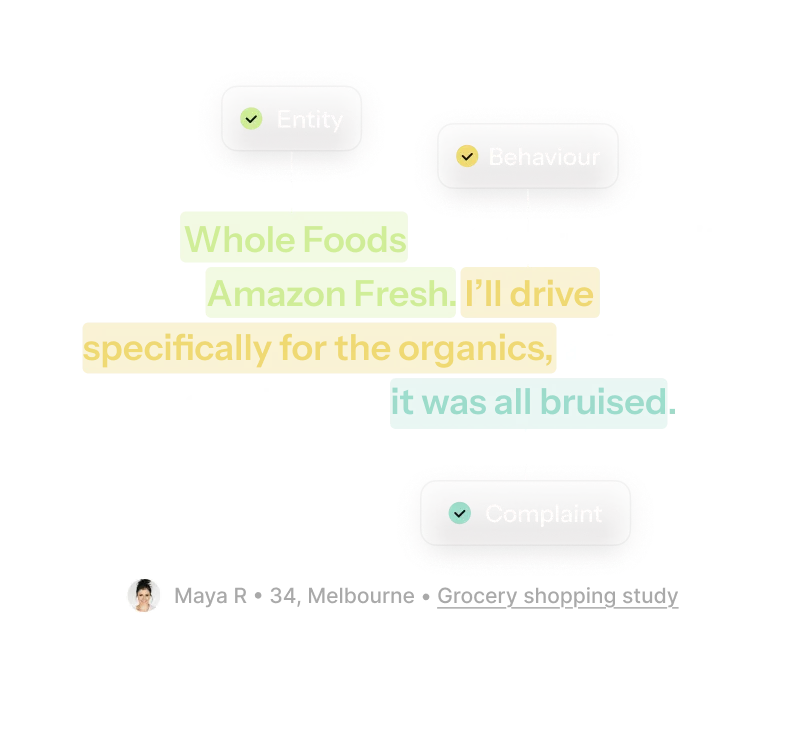
Every quote, structured
Our Truth Engine tags what each quote is about: the companies and products in play, the subject being discussed, and the point being made. So you can ask by name or by theme and get every mention, variants and misspellings included.
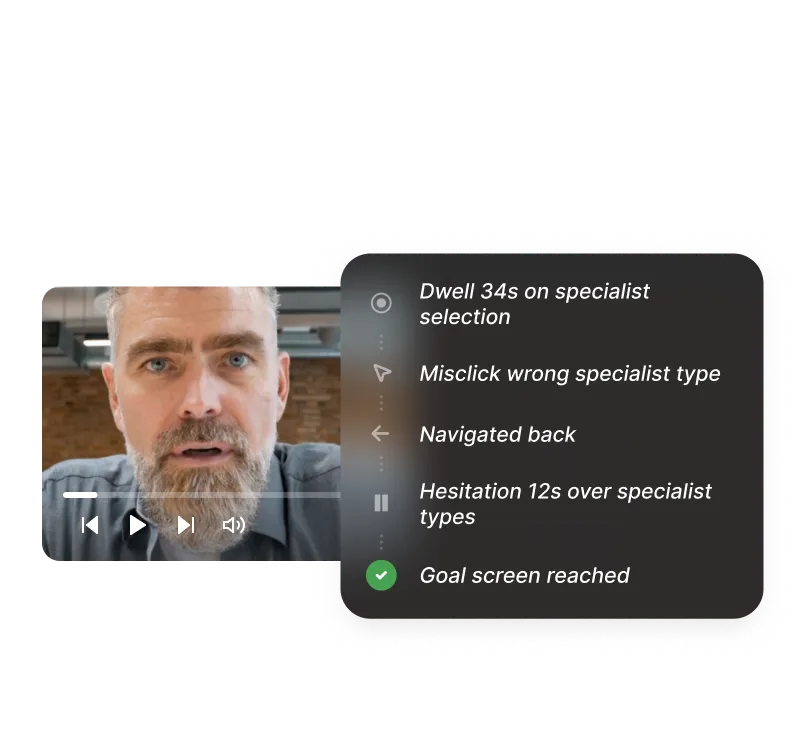
Every action, timestamped
Catch what the transcript missed. Actions like pauses, navigation and scroll depth line up against what participants said in at that moment, so you can see when the two don't match. This is currently in private beta.
The strongest insights come first
The Truth Engine scores every piece of evidence on whether someone told you a story or just said "yeah, I guess so," then weighs that against how many people it came from.
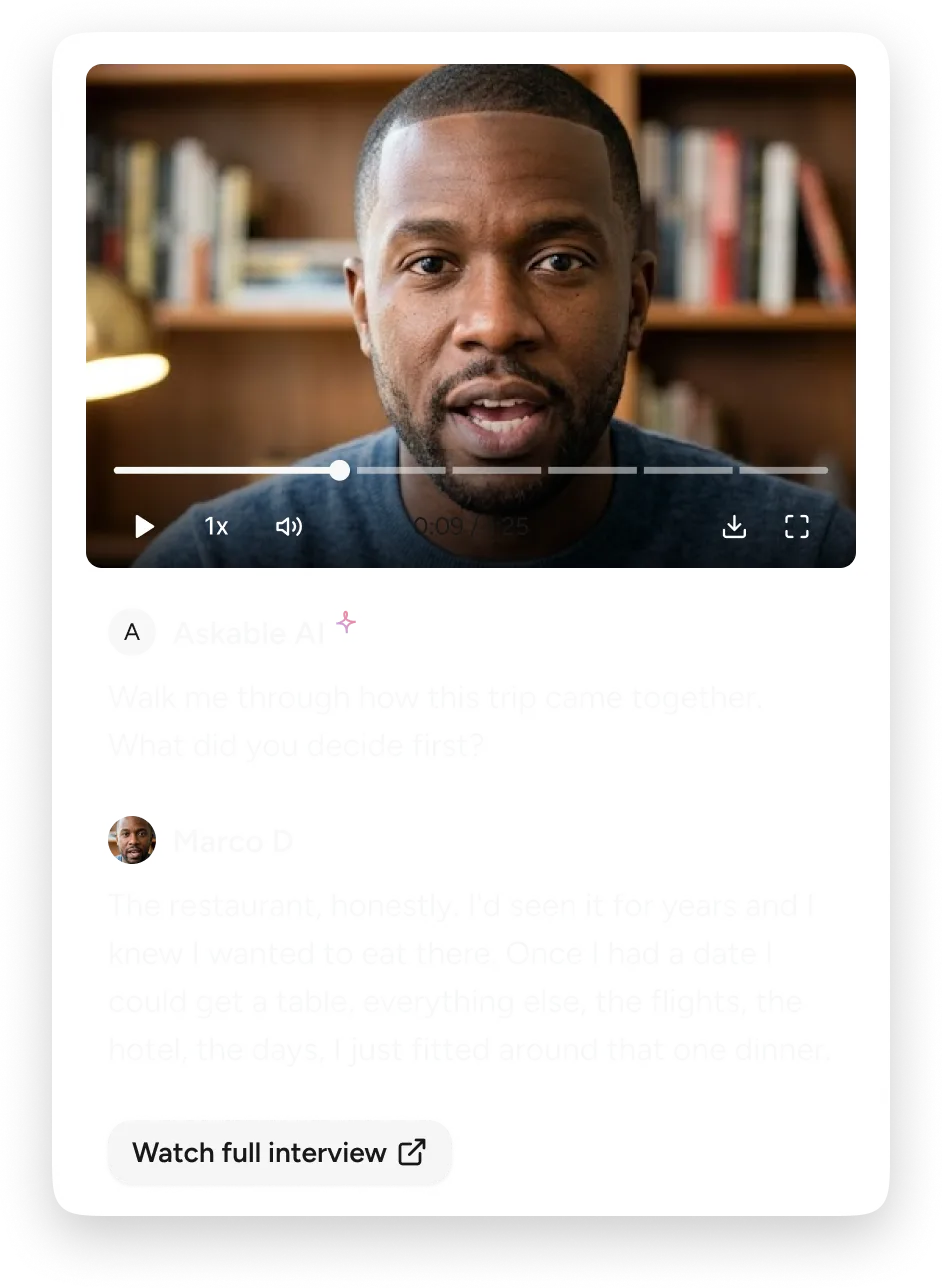
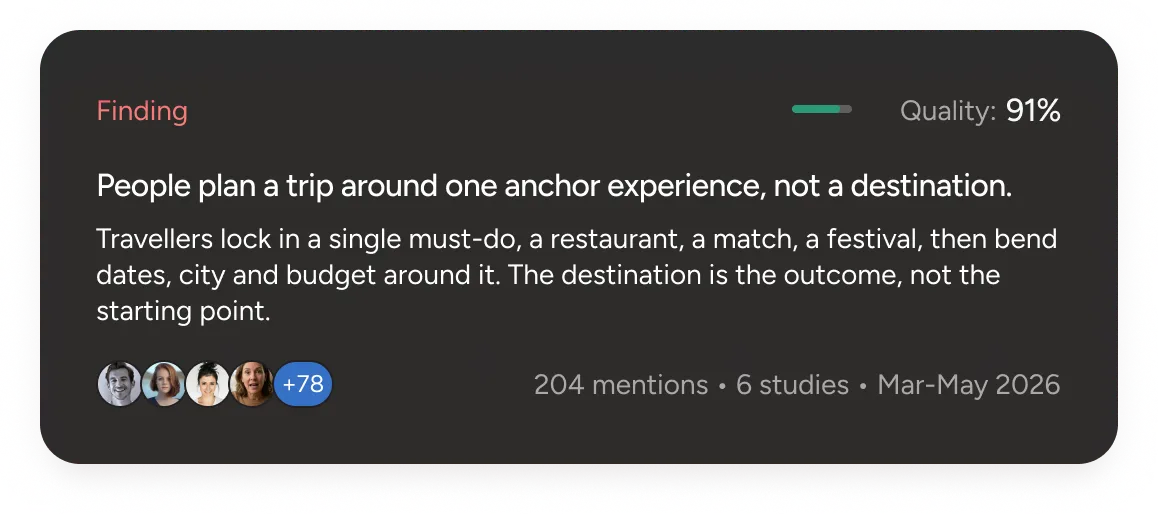
Click any insight.
See everyone behind it.

Insight
Evidence
Participant
Moment
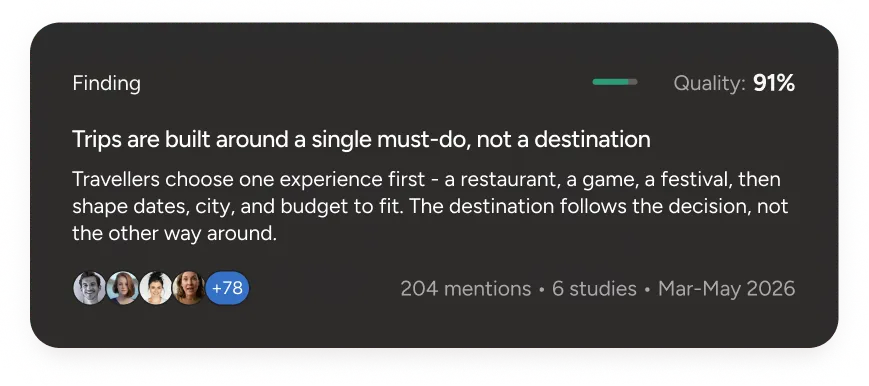
The Truth Engine reads each session on its own, then builds one insight from the same point across participants, however they phrased it.
Each insight arrives with the number of people behind it, how often it came up, and the clips that show it.
One repository. Four ways to reach it.
Your insights show up wherever you work, in whatever form you need.
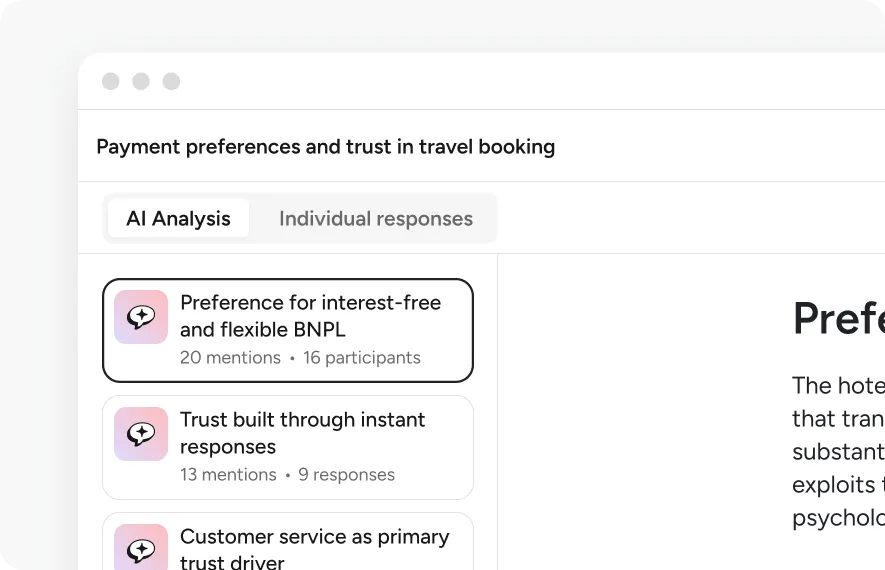
Study results
Your analysis is done when the study is. Open it and the insights are there, scored, with playable clips and source links.
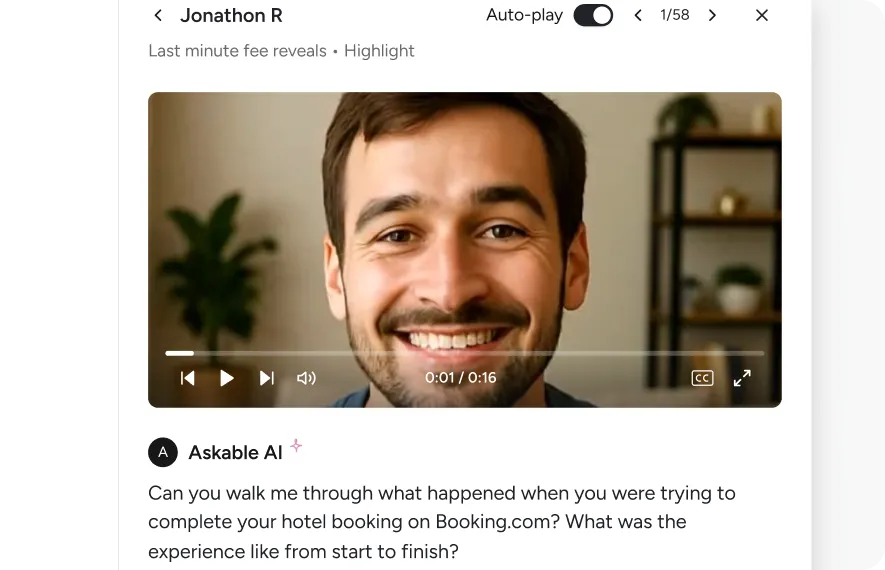
Ask AI
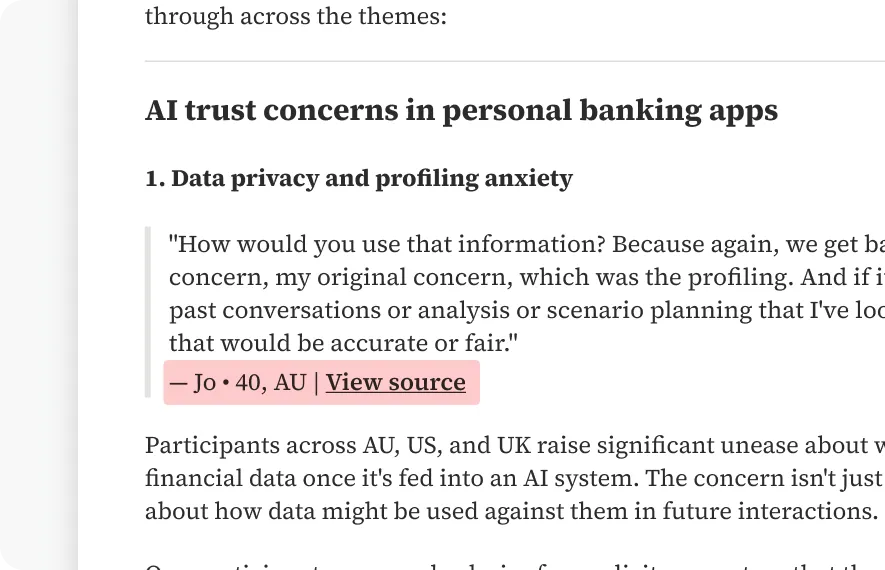
Get the answer without reading the transcripts. Ask a question, and insights come back with citations, quotes, and clips, every one traceable to a verified participant.
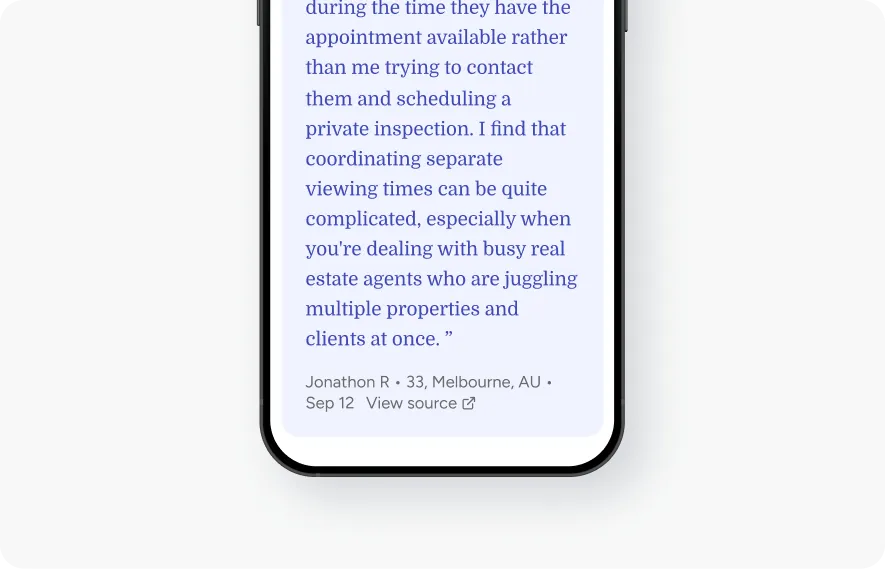
Docs and Reels
Share the research without rebuilding it. Generate a written doc or a video reel from any set of insights, editable in place, shareable by link.
Connectors in your stack
Your evidence sits in the tool where the decision happens. Connect Askable to Claude, ChatGPT, Figma, Cursor, Copilot, Lovable, and more.

FAQs
The Truth Engine is what turns your sessions into insights you can trust. It scores every quote and every action on screen as the session lands, groups the ones making the same point, and only then has AI describe what's there. The AI describes a pattern. It doesn't invent one.
Structurally, no. Insights are built only from evidence that already exists, each piece tied to a verified participant and a real moment in a session. A claim with nothing behind it has nothing to be built from. That's how the Truth Engine is put together. It's not something you have to ask it for.
No. Each session is read on its own, so the first one doesn't shape what gets found in the fifteenth, and insights form before anyone asks a question. The same quality bar applies to every session, so nothing is promoted for sounding interesting or dropped for being inconvenient.
Every session you've run on Askable that produced a recording: AI moderated and human moderated interviews, in-person sessions, live website tests, diary studies, and unmoderated studies with recording or screen share turned on. Insights live across studies rather than inside them, so a question you ask today can surface a quote from a session you ran last year.
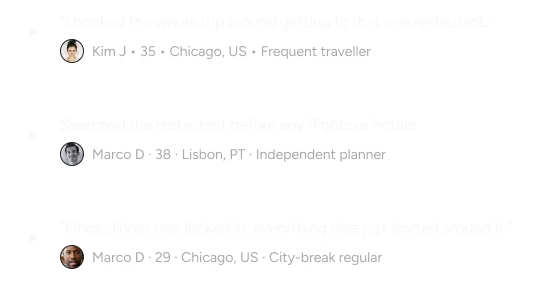
Every insight is clickable. Follow it to the quotes and actions behind it, then to the participant who produced them along with their screening responses, then to the timestamp and the exact clip. When someone asks where a claim came from, you can show them the moment instead of vouching for it.
No. Your research is not used to train any model, and it is never added to a shared dataset.
Follow any insight back to the person who said it.
Book a demo